How to Get Rid of Dead Animal Smell in Your Roof
A roof cavity is one of the most common places for a dead animal odour to develop, and unfortunately, it's also one of the more difficult spots to access and treat without the right approach. If you've traced a persistent, sickly smell back to your ceiling or roof space, you're dealing with a genuinely common Brisbane household problem, and thankfully, one with a clear, dependable solution.
At Fresho Dead Animal Removal Brisbane, roof cavities are where we spend a significant amount of our time, precisely because they're the most frequent location for this exact issue. In this guide, we'll walk through the thorough process for getting rid of dead animal smell in your roof, from confirming the source to fully eliminating the odour.
Why Roof Cavities Are Such a Common Location
Roof cavities offer exactly what many animals, particularly possums, are naturally drawn to: a warm, dry, enclosed space that closely mimics a natural tree hollow. This makes roofs a frequent nesting site, and unfortunately, also a common place for an animal to die of natural causes, illness, or entrapment, given how much time possums and other animal spend in these spaces once they've moved in.
Step 1: Confirm the Smell Is Actually Coming From the Roof
Before assuming the roof is the source, it's worth confirming the smell genuinely originates there rather than from another area of the home. Check whether the odour is strongest directly beneath the ceiling, particularly near manholes or vents, and note whether it intensifies when heating or air conditioning is running, since airflow through the roof cavity can carry odour more noticeably through the ductwork. Our guide on Why Does My House Smell Like a Dead Animal? covers how to rule out other common household odour sources first.
Step 2: Look for Ceiling Staining
A yellowish or brownish patch developing on the ceiling is one of the clearest indicators that an animal has died directly above that specific spot, as decomposition fluids seep through the plasterboard from the roof cavity. If you notice staining, this gives a strong, specific starting point for locating the carcass rather than searching the entire roof space.
Step 3: Assess Whether DIY Access Is Realistic
Some roof cavities are relatively easy to access via a manhole with a secure ladder, while others are far more difficult, low-clearance, poorly lit, or with limited safe walking surface across ceiling joists. Given the genuine risks involved, including the possibility of stepping through the ceiling, exposed wiring, and health risks from bacteria and parasites, professional access is generally the safer and more efficient choice for most homeowners.
Step 4: Professional Location Using Proper Equipment
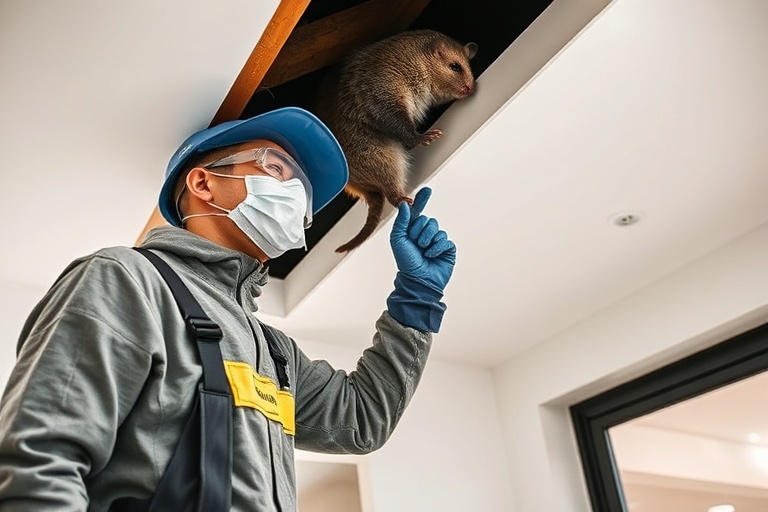
A professional technician uses a combination of scent tracking, visual inspection for staining or fly activity, and specialised equipment such as thermal imaging or fibre-optic cameras to pinpoint the carcass's exact location within the roof cavity, even in areas that aren't easily visible or accessible on foot.
Step 5: Safe Removal
Once located, the carcass is removed using appropriate protective equipment, given the bacteria and parasites commonly present in decomposing animals. Depending on the specific location within the roof, this is generally straightforward for an experienced technician, though more difficult positions near the edge of the roofline or behind significant insulation may require additional attention.
Step 6: Assessing Insulation and Surrounding Material
Decomposition fluids can soak into roof insulation, timber framing, and the underside of the roofing material itself. A thorough assessment at this stage determines how far contamination has spread and whether affected insulation needs replacing to fully resolve the odour, rather than leaving contaminated material in place to continue producing smell.
Step 7: Enzyme-Based Odour Treatment
This step is what genuinely eliminates the smell rather than just reducing it temporarily. Enzyme-based treatments break down the organic compounds responsible for decomposition odour at a molecular level, applied across the full area where contamination has spread, not just the immediate location where the carcass was found.
Step 8: Addressing Any Ceiling Damage
If ceiling staining has already developed, treating the roof cavity alone may not fully resolve the visible mark or any faint linked odour. Repainting or, in more significant cases, replacing the affected section of plasterboard ensures the issue is fully resolved both in terms of smell and appearance.
How Roof Design Affects the Removal Process
Not all roof cavities are created equal. Older Queenslander-style homes often have more spacious, easier-to-navigate roof spaces, while newer, more compact roof designs can present tighter clearance and more limited safe walking areas. Understanding your specific roof's construction helps a technician plan the most efficient, least disruptive approach to locating and removing the source of the odour.
What If the Smell Seems to Be Coming From Multiple Areas?
Occasionally, a roof cavity odour seems to spread across several rooms rather than being clearly concentrated in one spot, which can happen when airflow through the roof space carries the smell more broadly, or in rarer cases, when more than one animal is involved. A thorough professional inspection accounts for this possibility, checking the full roof space rather than assuming the problem is isolated to wherever the smell seems strongest from inside the home.
Why DIY Air Fresheners and Sprays Don't Work in a Roof Cavity
It might be tempting to place an air freshener near a manhole or spray a deodorising product into the roof space, but this approach almost never resolves the underlying issue. The bacteria producing the odour continue their activity regardless of any fragrance introduced nearby, and in an enclosed roof cavity with limited airflow, the combination of decomposition odour and artificial fragrance can sometimes become even more noticeable and unpleasant.
How Long Does Roof Odour Elimination Typically Take?
Straightforward cases, involving a single animal in an accessible part of the roof, can often be resolved within a single visit, including removal and initial odour treatment. More complex cases, involving extended decomposition or significant insulation contamination, may benefit from a follow-up visit a few days later to confirm the odour has fully cleared.
What to Expect Once the Job Is Final Check
After a completed roof treatment, most homeowners notice a significant improvement in odour within the same day, with any very faint residual smell continuing to clear over the following twenty-four to forty-eight hours as the treated area finishes drying. Good ventilation during this final period, opening windows and allowing airflow through the affected rooms, helps speed up this last stage of the process.
Preventing Future Dead Animal Issues in the Roof
Once the current issue is resolved, addressing how the animal gained access in the first place is an important final step in preventing a repeat occurrence. Our detailed guide on How to Seal Roof Entry Points to Keep Possums Out covers exactly how to identify and properly close off the access points most commonly responsible for possums, and unfortunately sometimes dead animal situations, occurring in roof cavities.
Frequently Asked Questions
-
How do I know if a dead animal is actually in my roof and not somewhere else?
Check whether the smell is strongest directly beneath the ceiling, look for ceiling staining, and note whether the odour worsens when heating or air conditioning is running, all of which point toward the roof cavity. -
Can I access my own roof cavity to look for the animal?
It's possible in some homes with safe, easy manhole access, but roof cavities carry genuine risks including unstable footing and exposed wiring, making professional access generally the safer choice. -
Will removing the animal fully get rid of the smell?
Often significantly, but not always comprehensively, since decomposition fluids can soak into insulation and require separate enzyme-based treatment to fully eliminate residual odour. -
How long does it take to get rid of dead animal smell in a roof?
Straightforward cases are often resolved in a single visit, while more complex cases with significant contamination may need a follow-up treatment a few days later. -
Will the smell come back after treatment?
If contamination is fully treated and any access point is properly sealed, the smell shouldn't return unless a new animal enters the space in future. -
Do I need to be home while the roof is being treated?
It's generally recommended, both to provide access and to discuss any findings, such as ceiling staining or insulation contamination, directly with the technician on the day.
Final Thoughts
A dead animal smell in the roof is a genuinely common issue for Brisbane homes, and while it can feel overwhelming, especially given how inaccessible roof cavities can be, it's a problem with a clear, dependable solution when approached properly: locate the source, remove it safely, treat the contamination, and address how it got in to begin with.
If your roof has developed an unpleasant, lingering smell, contact Fresho Dead Animal Removal Brisbane today for a fast, thorough service that eliminates the odour thoroughly.