Dead Animal Smell Removal Brisbane: How to Eliminate Odour Completely
There's nothing quite like the smell of a decomposing animal to make a house feel unlivable. It's a distinctive, sickly odour that air fresheners and candles simply can't cover up, and for good reason, since the smell isn't just sitting in the air, it's coming from an active source of bacteria and decomposition somewhere in your home. Understanding how to genuinely eliminate this odour, rather than temporarily mask it, is the key to actually resolving the problem.
At Fresho Dead Animal Removal Brisbane, complete odour elimination is the core of what we do, and it requires a more thorough approach than most homeowners initially expect. In this guide, we'll walk through exactly what it takes to eliminate a dead animal smell completely, from locating the source through to full deodorisation.
Why Masking the Smell Never Actually Works
Air fresheners, scented candles, and odour-neutralising sprays can temporarily reduce how strong a dead animal smell seems, but they don't address the underlying source. The bacteria responsible for the odour continue multiplying and producing smell compounds regardless of what fragrance is layered on top, which is why masking attempts typically fail within hours, and the underlying odour, sometimes combined with an unpleasant mix of the original smell and artificial fragrance, can actually become more noticeable over time.
Step 1: Locating the Actual Source
Genuine odour elimination starts with finding exactly where the smell is coming from, since treating the wrong area does nothing to resolve the underlying issue. Professional technicians use a combination of scent tracking, checking for fly activity or ceiling staining, and specialised equipment like thermal imaging or fibre-optic inspection cameras to pinpoint the carcass's exact location, even in hard-to-reach roof cavities, wall voids, or subfloor spaces.
Step 2: Complete Removal of the Carcass
Once located, the carcass itself needs to be fully removed, since its continued presence is the primary ongoing source of both bacteria and odour. This step alone often significantly reduces the smell, but it's rarely enough on its own to eliminate it completely, particularly if decomposition has been progressing for more than a day or two.
Step 3: Identifying Fluid Contamination
As decomposition progresses, fluids released from the carcass can soak into surrounding materials, most commonly insulation, timber framing, and in some cases plasterboard. This contaminated material continues harbouring bacteria and producing odour even after the carcass itself is gone, which is why simply removing the animal often only partially resolves the smell. A thorough inspection identifies exactly how far this contamination has spread.
Step 4: Enzyme-Based Deodorising Treatment
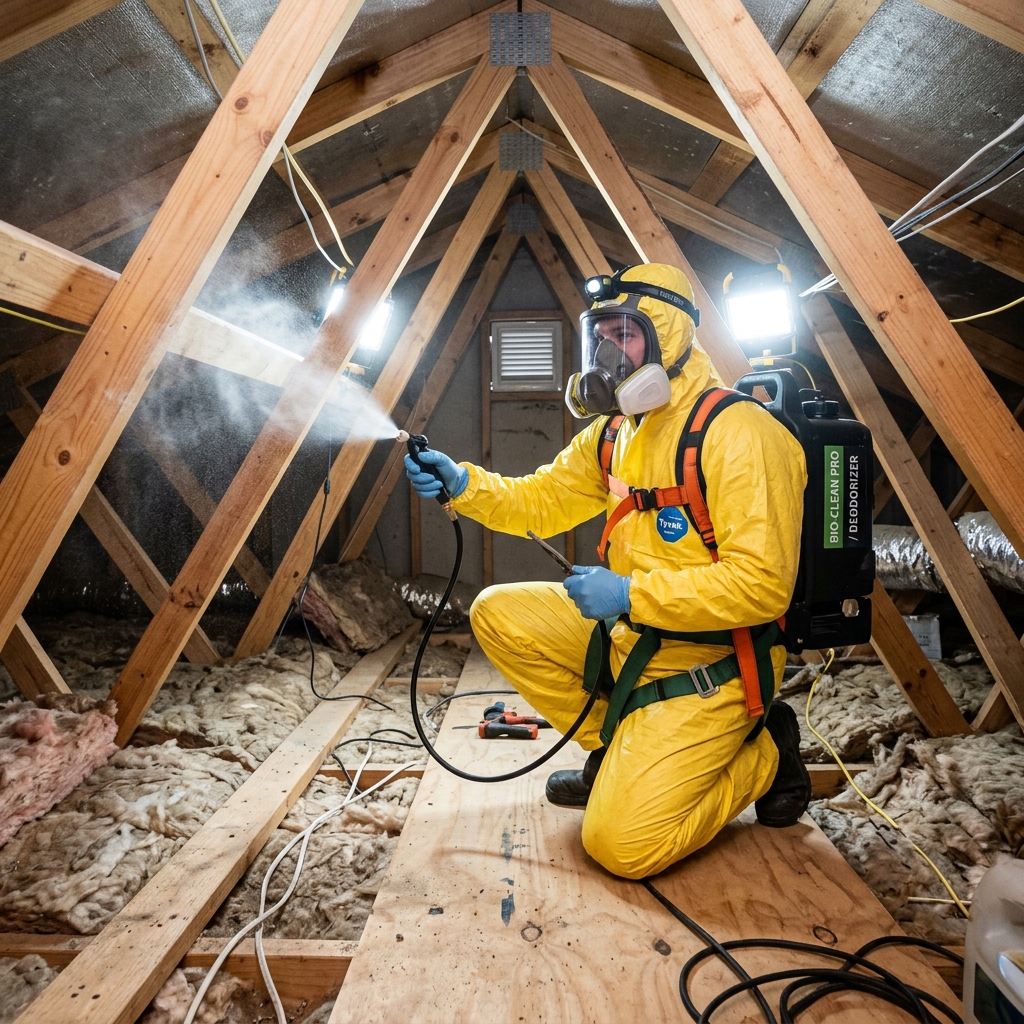
This is the step that genuinely eliminates odour at a molecular level, rather than covering it up. Enzyme-based treatments contain specialised bacterial cultures that break down the organic compounds responsible for decomposition odour, converting them into odourless byproducts rather than simply masking the smell with fragrance. For this treatment to be fully effective, it needs to reach every area where contamination has spread, not just the immediate location of the carcass itself.
Step 5: Assessing Whether Insulation Replacement Is Needed
In cases of significant fluid contamination, particularly where a carcass has been decomposing for an extended period, enzyme treatment alone may not fully resolve the odour if insulation has absorbed a substantial amount of fluid. In these situations, replacing the affected section of insulation, alongside treating the surrounding area, is often the only way to achieve genuinely complete odour elimination rather than a partial improvement.
Step 6: Addressing Ceiling or Wall Staining
Visible staining on ceilings or walls, caused by fluids seeping through from above, can sometimes retain a faint odour even after the underlying contamination has been treated, particularly in humid conditions. Repainting or, in more severe cases, replacing the affected section of plasterboard may be necessary to fully eliminate any lingering smell associated with visible staining.
Step 7: Improving Ventilation During the Final Stages
Once treatment is complete, good ventilation helps clear any remaining faint odour more quickly as the treated area finishes drying and settling. Opening windows and using fans in the affected room for the following day or two can noticeably speed up this final stage of odour clearance.
How Brisbane's Climate Affects Odour Elimination
Brisbane's warm, humid climate accelerates both decomposition and the bacterial activity responsible for lingering odour, which means treatment often needs to be more thorough than it might in a cooler, drier climate. Humidity can also cause enzyme treatments to take slightly longer to fully dry and complete their breakdown process, which is factored into how our technicians plan treatment and follow-up timing for Brisbane properties specifically.
What to Expect Immediately After Treatment
It's normal for a very faint, residual smell to be noticeable immediately after enzyme treatment is applied, as the solution is still actively working to break down remaining organic compounds. This typically fades significantly within twenty-four to forty-eight hours as the treated area finishes drying, and shouldn't be mistaken for a sign that the treatment hasn't worked.
Why DIY Odour Elimination Attempts Usually Fall Short
Homeowners attempting to resolve dead animal odour themselves often focus solely on removing the visible carcass, without addressing fluid contamination in surrounding materials or applying proper enzyme-based treatment. This is why a smell can seem to improve initially after a DIY removal attempt, only to linger or partially return over the following days as residual bacteria in contaminated insulation or timber continues producing odour.
How Long Does Complete Odour Elimination Take?
Straightforward cases, involving a single, recently deceased animal in an easily accessible location, can often achieve near-complete odour elimination within a single visit. More complex cases, involving extended decomposition, significant fluid contamination, or hard-to-reach locations, may require a follow-up treatment a few days later to confirm the odour has fully cleared, particularly in Brisbane's warm, humid conditions where bacterial activity can be more persistent.
Understanding the Risk of Delaying Treatment
The longer a dead animal situation is left unaddressed, the more extensive the eventual odour elimination process tends to become, as contamination spreads further into surrounding materials. Our detailed article on What Happens If You Leave a Dead Animal in Your Roof or Wall? covers exactly how the situation escalates over time and why prompt action makes such a meaningful difference to both cost and outcome.
Why A Follow-Up Visit Sometimes Makes All the Difference
For more complex cases, a scheduled follow-up visit a few days after initial treatment allows a technician to confirm the odour has genuinely and completely cleared, rather than simply assuming success based on the initial treatment alone. This extra step catches the rare cases where a small pocket of contamination was missed initially, ensuring the problem is fully resolved rather than left to potentially resurface.
Signs the Odour Has Been Fully Eliminated
- No lingering smell detectable in the previously affected room, even in warm or humid conditions
- No return of odour after the treated area has fully dried
- No visible new staining or fly activity in the treated area
- Confirmation from a follow-up inspection, where recommended for more complex cases
Frequently Asked Questions
-
Can I get rid of dead animal smell with just an air freshener?
No, air fresheners only mask the smell temporarily and don't address the underlying bacteria and contamination causing it, so the odour typically returns quickly. -
Why does the smell linger even after the animal is removed?
Fluids from decomposition can soak into insulation, timber, and other materials, continuing to harbour bacteria and produce odour until properly treated with enzyme-based solutions. -
How long does professional odour elimination take to work?
Straightforward cases often show significant improvement within the same visit, while more complex cases may need a follow-up treatment a few days later for complete resolution. -
Will I need to replace insulation to fully eliminate the smell?
In cases of significant fluid contamination, yes, replacing heavily affected insulation is sometimes necessary alongside enzyme treatment to achieve complete odour elimination. -
Is professional treatment necessary, or can I do this myself?
DIY attempts often only partially resolve the issue, since they typically miss fluid contamination in surrounding materials. Professional enzyme-based treatment addresses the odour at its actual source. -
Does the size of the animal affect how long odour treatment takes?
Yes, larger animals generally produce more decomposition fluid and a stronger odour, which can mean a larger treatment area and, in some cases, a longer overall process to achieve complete elimination.
Final Thoughts
Truly eliminating a dead animal smell requires more than just removing the carcass, it means identifying and treating every area affected by contamination, using enzyme-based solutions that break down odour at its source rather than masking it. With the right, thorough approach, complete odour elimination is genuinely achievable, even in cases that have been left for some time.
If a dead animal smell is making your Brisbane home unbearable, contact Fresho Dead Animal Removal Brisbane today for a thorough, professional service that eliminates odour completely, not just temporarily.