Why You Should Never Remove a Dead Animal Yourself
When a foul smell indicates a dead animal in your roof, ceiling, or wall, the DIY instinct often kicks in. Homeowners might think they can easily crawl into the space and throw the carcass in a bin to save money. However, DIY dead animal removal is highly dangerous, exposing you to severe biohazards, physical risks, and potential structural damage. In this guide, we outline the primary reasons why you should never attempt to remove a deceased animal yourself.
1. Severe Exposure to Dangerous Biological Pathogens
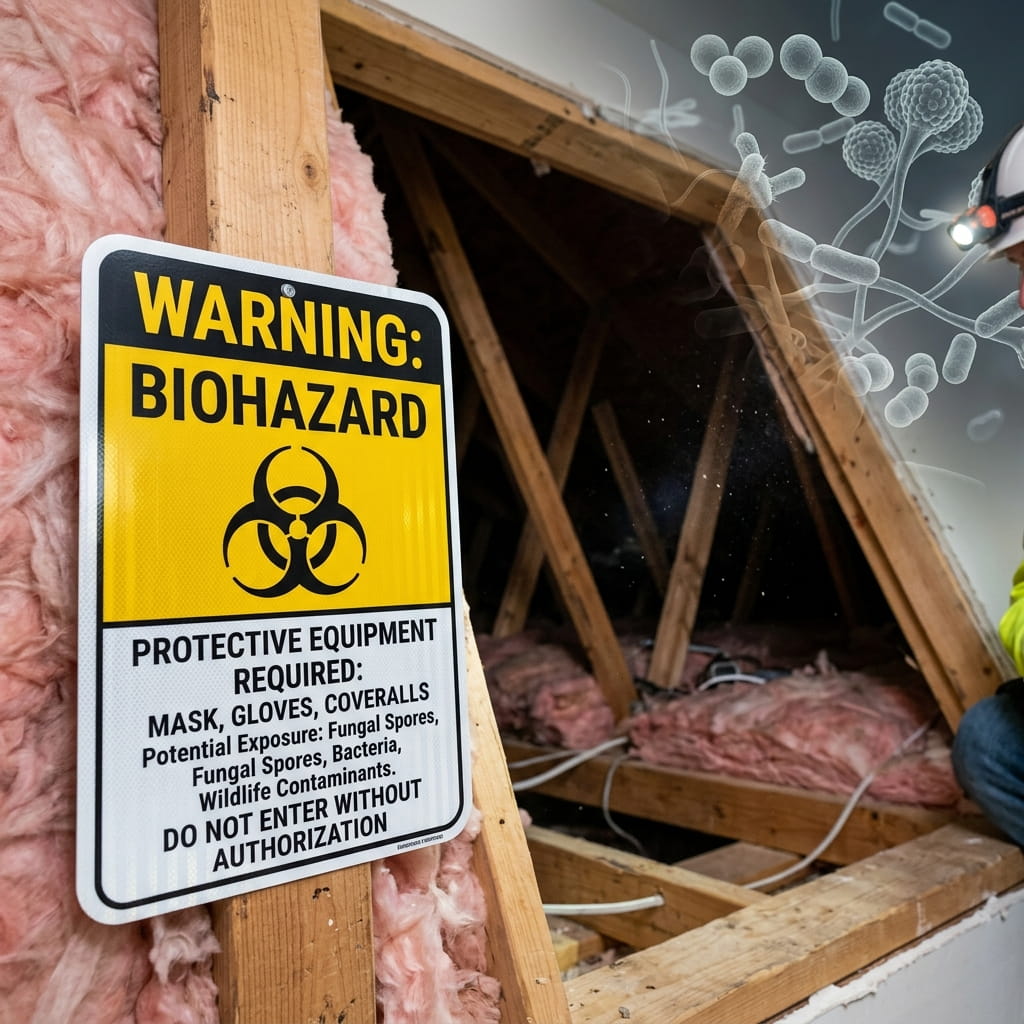
A decomposing animal carcass is not just a source of bad smells; it is a highly concentrated biohazard. The moment an animal dies, its immune system ceases to function, allowing the bacteria inside its digestive tract and organs to multiply thoroughly unchecked. As a result, the carcass and the immediate surrounding area become saturated with billions of active pathogens.
Some of the most common and dangerous pathogens associated with decomposing wild animals include:
- Salmonellosis and Colibacillosis: These gastrointestinal infections are caused by Salmonella and E. Coli bacteria, which are highly prevalent in the intestines of rodents and possums. Contact with contaminated dust, insulation, or the carcass itself can lead to severe diarrhea, vomiting, and dehydration.
- Leptospirosis: A severe bacterial infection transmitted through contact with soil, water, or surfaces contaminated with the urine of infected rodents. The bacteria can enter through tiny cuts in your skin or through your eyes, nose, and mouth, potentially causing kidney damage or meningitis.
- Tularemia: Contracted by touching infected animal tissues or inhaling contaminated dust, causing high fever, skin ulcers, and swollen lymph glands.
- Hantavirus Pulmonary Syndrome: A rare but life-threatening respiratory disease carried by rodents and spread through contact with infected carcass fluids, droppings, or dust.
Without professional-grade personal protective equipment (PPE), including thick nitrile gloves, hazmat suits, and high-efficiency particulate air (HEPA) respirators, you put yourself at immediate risk of contracting these debilitating illnesses.
2. The Immediate Threat of Biting Parasites
Wild animals are host to a variety of external parasites, such as fleas, ticks, bird mites, and lice. While the host animal is alive, these parasites remain happy on their warm fur or feathers, feeding on their blood. However, once the host animal dies, its body cools rapidly, and its blood coagulates, rendering it useless to the parasites.
This cooling process triggers a massive parasite exodus. Thousands of hungry, biting insects abandon the carcass and migrate outward in search of a new warm-blooded host. If you climb into a cramped roof space or subfloor to retrieve the animal yourself, you will immediately become the closest warm-blooded target. You risk being bitten by thousands of mites or fleas, which can cause intense itching, severe allergic skin reactions, and potentially transmit secondary blood-borne infections. Professionals utilize specialized insecticidal dusts and sprays to treat the area before extraction, neutralising these parasites on contact.
3. Physical Hazards and Fall Risks in Confined Spaces
Roof cavities, attics, and subfloors are incredibly hazardous working environments. They are typically pitch-black, cramped, poorly ventilated, and can reach extreme temperatures exceeding 50 degrees Celsius. Crawling through these confined spaces requires excellent physical coordination and a deep understanding of structural safety.
Severe Physical Risks
One of the greatest dangers in a roof space is falling through the ceiling. The plasterboard sheet of your ceiling cannot support human weight. You must step exclusively on the wooden ceiling joists, which are often hidden beneath thick layers of dusty insulation. A single misstep can send you falling through the ceiling into the room below, causing serious bone fractures or spinal injuries, as well as extensive structural ceiling damage. Additionally, roof spaces contain exposed electrical wiring, solar conduit lines, and sharp timber fasteners, creating serious risks of electrocution or puncture wounds. Older Queenslander homes in Brisbane may also contain loose asbestos dust, presenting a major long-term inhalation hazard.
4. High Risk of Carcass Rupture and Fluid Leaking
As an animal decomposes, its skin and tissues soften and lose their structural integrity, a process known as autolysis. During the active decay and bloating stages, the internal organs liquefy, and gas pressure builds up inside the body cavity. If you attempt to handle or lift the carcass without specialized tools and preparation, the delicate skin can easily rupture.
A ruptured carcass releases highly concentrated, foul-smelling decomposition fluids, blood, and liquefied tissue directly onto your hands, clothing, and your ceiling plasterboard or timber framing. This makes the odour significantly worse, ruins porus building materials, and spreads bacterial contamination over a much wider area. Professional technicians use specialized heavy-duty scrapers, specialized extraction bags, and careful handling techniques to ensure the carcass is removed fully intact without leaking contaminants or spilling decay residue.
5. Incomplete Decontamination and Odour Management
Many homeowners think that simply throwing the carcass in a plastic bag and spraying some supermarket air freshener is enough to resolve the problem. However, this basic approach does not eliminate the invisible biological hazards left behind. Bodily fluids and decay products soak deep into structural timber joists and plasterboard, leaving a thorough bacterial reservoir that will continue to release a putrid stench for months, especially during hot or humid weather. Measure bleach or household cleaners only disinfect the top surface, unsuccessful to penetrate the grain of wood or porous plasterboard cavities. Working with a dedicated team ensures that the correct chemical neutralizers are used, giving you peace of mind that the area is clean and safe.
6. The Risk of Thorough Odour Impregnation
Another major danger of DIY attempts is unsuccessful to treat the biological remains properly, which can lead to thorough odour impregnation of your home's structure. When an animal dies, the fatty acids and biological oils released during decomposition seep deeply into the grain of timber support beams and the gypsum core of ceiling plasterboard. If you simply bag the carcass and wipe down the surface with household soap or basic bleach, these deep-seated oils will remain untouched.
Over time, these organic compounds will continue to break down, releasing a faint but persistent musky decay smell. This odour is highly reactive to environmental changes; every time the weather becomes warm, damp, or humid, the moisture in the air will reactivate the deep-seated oils, causing the putrid smell to rise again. Professional technicians use specialized enzyme-based neutralizers that penetrate deep into porous structural elements, breaking down the organic oils on a molecular level to prevent thorough odour retention, something that measure household products simply cannot achieve.