How to Get Rid of Dead Animal Smell in Walls
A dead animal smell coming from inside a wall presents a genuinely different challenge to one in a roof cavity. Walls are enclosed, structural spaces with limited access points, which means locating and reaching the source often requires a more methodical, considered approach than a roof, where at least a manhole typically provides some way in from the outset.
At Fresho Dead Animal Removal Brisbane, wall cavity jobs are among the more technically demanding calls we handle, precisely because of this limited access. In this guide, we'll walk through why wall cavities present unique challenges and exactly how to resolve dead animal smell coming from inside your walls.
Why Animals End Up in Wall Cavities
Wall cavities offer a similarly appealing, enclosed environment to roof spaces, particularly for rats and mice, which are agile enough to access these narrow spaces through small gaps around pipes, cables, or deteriorated sections of external cladding. Possums occasionally end up in wall cavities as well, though this is somewhat less common than roof cavity access, given the tighter, more confined nature of most wall spaces.
How Wall Cavity Odour Differs From Roof Odour
Because wall cavities are narrower and more enclosed than most roof spaces, odour from a wall cavity can sometimes seem more concentrated and localised to a specific section of a room, appearing to emanate directly from a particular patch of wall rather than spreading more broadly the way roof cavity odour sometimes does through ceiling airflow.
Locating the Source Within a Wall
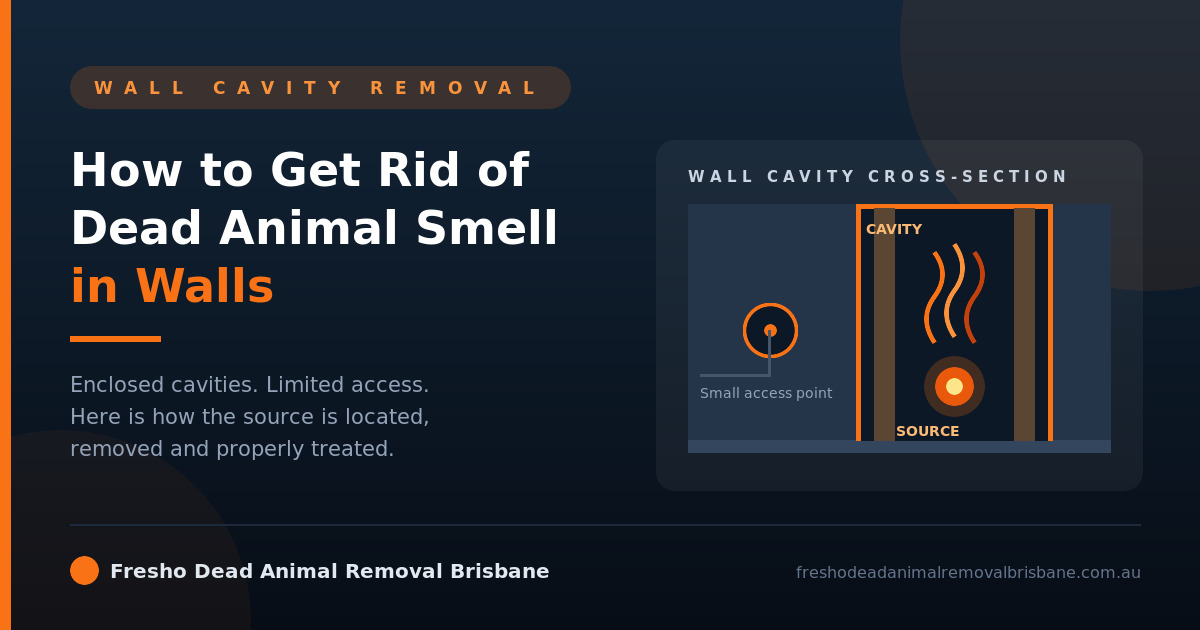
Pinpointing the exact location within a wall cavity is considerably more challenging than in a roof, given the lack of any natural access point for visual inspection. Professional technicians typically use a combination of methodical scent tracking along the wall's length, checking for any warmth differences using thermal imaging, which can sometimes detect the heat signature of active decomposition, and in more difficult cases, a fibre-optic camera inserted through a small, minimally invasive access point.
Why DIY Wall Access Is Particularly Risky
Attempting to access a wall cavity yourself carries genuine risks beyond those typically linked to roof cavities. Walls often contain electrical wiring, plumbing, and structural framing that isn't always where you might expect, and cutting into a wall without proper familiarity with what's behind it can lead to costly additional damage well beyond the scope of the original problem.
The Minimally Invasive Access Approach
Professional technicians generally aim to use the smallest, most minimally invasive access point possible, often a small hole that can be easily patched afterward, rather than removing large sections of wall unnecessarily. This approach balances the need for physical access against minimising cosmetic and structural disruption to your home.
How Technicians Decide Where to Access the Wall
Choosing the right spot for an access point involves balancing proximity to the suspected carcass location against practical considerations like avoiding known plumbing or electrical runs, and choosing a spot that's easier to patch invisibly afterward, such as a lower section of wall that will be covered by furniture, where possible.
What Homeowners Can Do Before a Technician Arrives
While waiting for a professional inspection, it's worth noting exactly where along the wall the smell seems strongest, and at what approximate height, since this information genuinely helps narrow down the likely search area. Avoid attempting to cut into the wall yourself in the meantime, given the risks involved with unknown wiring or plumbing behind the surface.
Removal and Treatment Process
Once located and accessed, the carcass is methodically removed using appropriate protective equipment, followed by enzyme-based deodorising treatment applied to the affected section of the cavity to address any residual bacteria and fluid contamination. Given the enclosed nature of wall cavities, ensuring the treatment reaches the full extent of the affected area is particularly important for genuinely resolving the odour rather than leaving a partially treated pocket of contamination.
Why Some Wall Cavity Jobs Need a Second Access Point
Occasionally, the first access point doesn't provide a clear enough view or reach to fully locate or remove the carcass, particularly in walls with internal bracing or insulation that limits visibility even with a fibre-optic camera. In these cases, a second, methodically chosen access point may be needed, though experienced technicians aim to minimise this wherever the initial inspection findings allow.
How This Differs From a Simple Pest Control Callout
It's worth distinguishing a dead animal wall cavity job from a regular pest control visit. General pest control typically focuses on treating an active infestation, whereas dead animal removal specifically addresses locating and removing a deceased animal and treating the resulting odour and bacterial contamination, which sometimes requires a different set of tools and expertise entirely.
Patching and Repair After Access
Once removal and treatment are Final Check, any access point created during the process is patched and repaired, restoring the wall's appearance. For most straightforward jobs, this results in a small, easily concealed repair rather than any significant, lasting cosmetic impact on the affected room.
Why Wall Cavity Jobs Sometimes Take Longer
Given the more involved location and access process, wall cavity jobs can sometimes take longer than a comparable roof cavity case, particularly if the initial access point doesn't immediately reveal the carcass and additional investigation is needed. Setting realistic expectations around timing helps avoid frustration if a wall cavity job requires more time than a straightforward roof removal would.
Signs the Smell Is Coming From a Wall Rather Than the Roof
- The odour seems concentrated at a specific height on a wall, rather than strongest near the ceiling
- There's no noticeable increase in smell near ceiling manholes or vents
- You can hear scratching or movement sounds coming from within a wall rather than overhead
- There's no ceiling staining, which would typically indicate a roof cavity source instead
What If You're Not Sure Whether It's a Wall or Roof Issue?
If you're uncertain whether the smell is coming from a wall or the roof above, a professional inspection can quickly determine the correct location using proper equipment rather than guesswork. Our broader guide on Why Does My House Smell Like a Dead Animal? covers how to narrow down the general source before committing to a specific wall or roof cavity investigation.
Preventing Future Wall Cavity Issues
Once a wall cavity issue is resolved, addressing how the animal gained access in the first place helps prevent a repeat occurrence. This often involves sealing gaps around external pipes, cables, or vents, and in cases involving rodents, may warrant a broader pest control assessment to address any underlying infestation rather than treating this as an isolated incident.
Frequently Asked Questions
-
How is a dead animal in a wall different from one in a roof?
Wall cavities are narrower and lack natural access points like a roof manhole, making location and removal more technically involved, often requiring a small, minimally invasive access point to be created. -
Will removing a dead animal from my wall require major repair work?
Generally not. Technicians aim to use the smallest possible access point, which is then patched and repaired, usually resulting in only a minor, easily concealed repair. -
Can I locate a dead animal in my wall myself?
It's genuinely difficult without professional equipment like thermal imaging or fibre-optic cameras, given walls lack any natural viewing access, so professional help is generally recommended. -
What animals typically end up in wall cavities?
Rats and mice are the most common, given their ability to access narrow gaps, though possums occasionally end up in wall spaces as well. -
How do I know if the smell is coming from a wall rather than the roof?
Signs include odour concentrated at a specific wall height rather than near the ceiling, no ceiling staining, and sounds of movement coming from within the wall itself. -
Will I need to repaint the whole wall after the repair?
Usually not, since the access point is generally small and can often be patched and touch-up painted to blend in without needing to repaint the entire wall.
Final Thoughts
Dead animal smell in a wall cavity presents a more technically demanding challenge than a roof, given the limited access and increased risk of structural complications from DIY attempts. A professional, minimally invasive approach ensures the source is properly located, removed, and treated, with only minor, easily repaired cosmetic impact on your home.
If you suspect a dead animal is decomposing inside a wall in your Brisbane home, contact Fresho Dead Animal Removal Brisbane today for a methodical, professional resolution.