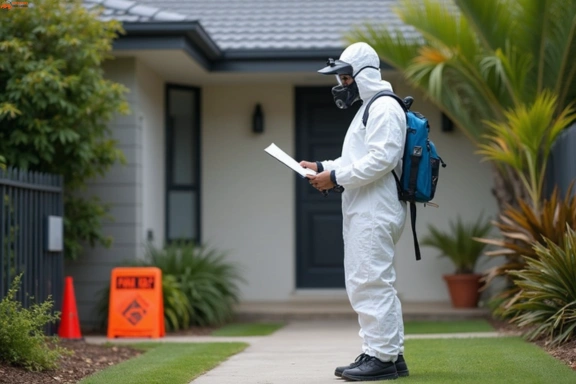
Found a Dead Animal Near Your Brisbane Home? What Should You Do First?
It is an unpleasant discovery and it usually happens at an inconvenient moment. A possum in the garden bed on a Sunday morning, a rat on the driveway as you are leaving for work, or a smell near the side of the house that leads you to something under the deck. The instinct is either to deal with it immediately or to leave it and hope it resolves itself, and neither is quite the right first move.
Brisbane's climate compresses the timeline. In summer heat, decomposition that might take a week in a cooler climate is well advanced in two days, so the window where a carcass is straightforward to deal with is short. Here is the order worth working through.
Step 1: Keep People and Pets Away From It
Before anything else, move children and animals away. Dogs will roll on a carcass or try to carry it, and cats will investigate. This is the step most people skip, and the one that causes the most follow-on problems.
A deceased animal carries bacteria, internal parasites and, importantly in Queensland, fleas, ticks and mites that leave the body as it cools and look for a new host. A dog that noses a dead rat picks up a parasite load in seconds.
Step 2: Work Out Where It Actually Is
Location determines almost everything about what happens next.
- Open ground on your property — garden, lawn, driveway, pool surrounds. The most straightforward situation.
- Under the house, deck or a low subfloor — confined, poorly ventilated and difficult to reach safely.
- In a wall cavity, roof space or ceiling — you will smell it before you see it, and it is not a yard job.
- On the footpath, nature strip or roadway — this is usually a council matter rather than yours.
- On a neighbouring property — worth a conversation before anything else.
If you cannot see the animal and are working from smell alone, treat that as a separate problem. It means the carcass is enclosed somewhere, and the useful first step is narrowing down the area rather than opening anything up.
Step 3: Do Not Move It Yet
There are several good reasons to pause before picking anything up.
- Baited animals. A rat or possum that died after taking rodenticide is toxic to anything that scavenges it. Moving it to a bin a dog can reach, or into garden waste, extends the problem.
- Protected native wildlife. Possums, gliders, bandicoots, koalas and most native birds are protected in Queensland. A native animal found in unusual circumstances, or several together, is worth reporting rather than quietly removing.
- It may not be dead. Possums can be immobile, injured or heat-stressed rather than deceased, and an injured possum will defend itself. A female may also have live young in the pouch.
- The fluid is the real mess. Once decomposition begins, lifting a carcass releases fluid into soil, pavers or subfloor timber, and that is what lingers for weeks.
Step 4: Decide Whether This Is Yours to Handle
A small, recently deceased animal in the open, with no sign of baiting and no chance it is a protected native, is something many people reasonably manage themselves with disposable gloves, a shovel, doubled heavy-duty bags and a thorough wash of the area afterwards.
Step back and call someone if the animal is under the house, in a wall or in the roof; if it is large, such as a possum, cat, dog or kangaroo; if there is visible fly activity or fluid staining; if it is near the pool, a water tank or a vegetable garden; if it may be a protected native; or if you think it was baited.
Step 5: Deal With the Area, Not Just the Animal
Removing the carcass is only half the job. Anything the fluid touched keeps smelling and keeps attracting flies. Soil may need turning out and replacing, pavers and concrete need treating rather than hosing, and subfloor timber needs proper attention because the smell rises into the house.
Household bleach is a poor choice. It disinfects but does nothing for odour compounds, and on porous surfaces it sits on top. The products that work break those compounds down rather than covering them.
What Not to Do
- Do not hose a carcass or the area around it before removal. Water spreads contamination further into soil and under pavers.
- Do not put a baited animal in a compost bin or green waste.
- Do not spray deodoriser over the top and wait. It masks the smell and makes the source harder to locate.
- Do not crawl into a subfloor or roof space to retrieve something without proper protection, light and someone else present.
- Do not wait for it to dry out on its own. In a Brisbane summer the contamination spreads faster than the smell fades.
If You Would Rather Not Deal With It
Most people call because of where the animal is rather than what it is. We handle dead possum removal, dead rat removal and removals from under the house across Brisbane, including the decontamination afterwards.
If you are not sure what you are looking at, get in touch and describe it. Species, location and roughly how long it has been there is usually enough for us to tell you whether it is worth handing over.