Dead Animal Smell vs Gas Leak: How to Tell the Difference
Noticing an unusual, unpleasant smell in your home naturally raises the question of exactly what you're dealing with, and in some cases, that uncertainty can genuinely matter for your safety. While a dead animal smell is unpleasant but not urgently dangerous, a gas leak is a genuine safety concern requiring immediate action. Being able to confidently tell the two apart is important, and thankfully, there are some clear, dependable differences to look for once you know what to check.
At Fresho Dead Animal Removal Brisbane, we occasionally get calls from understandably anxious homeowners unsure which situation they're facing. In this guide, we'll walk through exactly how to distinguish between dead animal smell and a gas leak, and what to do in each case.
Why This Distinction Genuinely Matters
A dead animal smell, while unpleasant and worth addressing, doesn't pose an immediate safety emergency in the way a gas leak does. Natural gas leaks carry genuine risk of fire, explosion, or health effects from prolonged exposure, meaning correctly identifying a suspected gas leak and responding immediately is a genuine safety priority, quite different from the more manageable urgency of a dead animal situation elsewhere in the home.
What Dead Animal Smell Typically Resembles
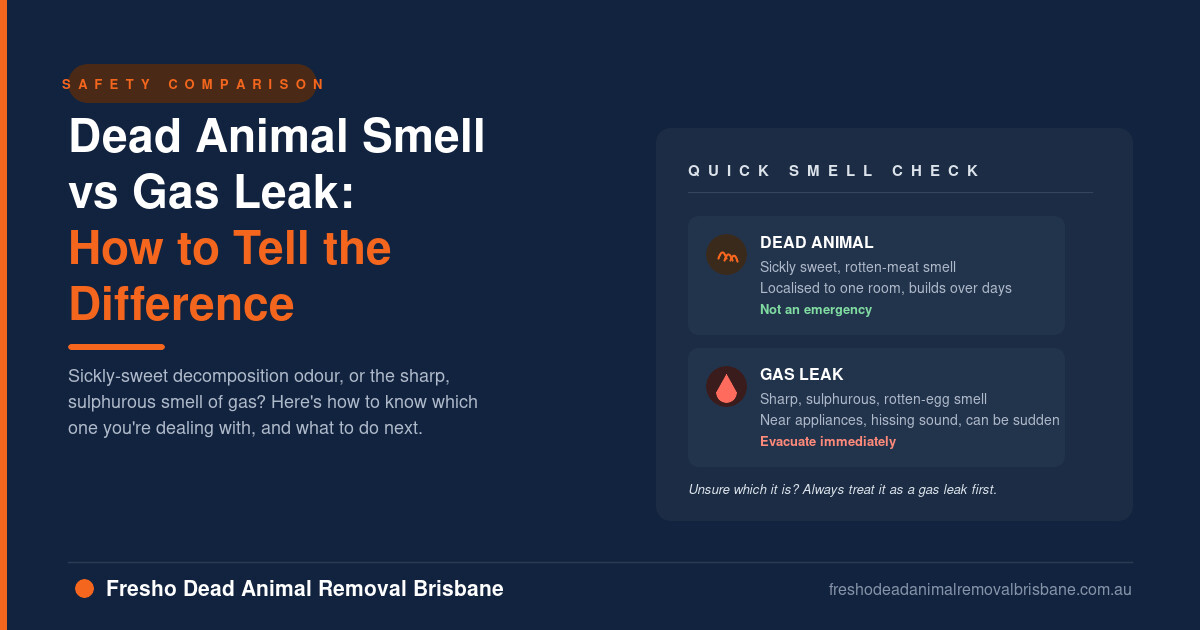
Dead animal odour has a distinctly sickly, sweet, and rotten character, often described as similar to spoiled meat or rubbish left too long in warm weather. It tends to be more pungent and cloying than most other household smells, and typically doesn't respond to cleaning, ventilation, or air fresheners, since the source is an ongoing biological process rather than a surface residue.
What Natural Gas Actually Smells Like
Natural gas itself is actually odourless, but gas suppliers add a chemical called mercaptan specifically so leaks can be detected by smell. Mercaptan produces a distinctive sulphurous, rotten-egg smell, sharp and somewhat acrid, quite different from the sweeter, more organic workmanship of decomposition odour.
Key Differences in the Smell Itself
- Dead animal: sickly sweet, rotten meat workmanship, often described as nauseating rather than sharp
- Gas leak: sharp, sulphurous, rotten-egg workmanship, often described as acrid or pungent
- Dead animal: tends to be localised to one specific area or room
- Gas leak: can be localised near an appliance or spread more broadly depending on the leak source
Where Each Smell Tends to Be Strongest
Dead animal smell is typically strongest in a specific room, often near a ceiling, wall, or floor area corresponding to where the animal is located, and tends to worsen gradually over several days as decomposition progresses. Gas leaks are often strongest near gas appliances, such as stoves, water heaters, or gas heating units, or near visible gas lines and connections, and the smell can appear suddenly rather than building gradually over time.
Additional Signs of a Gas Leak Beyond Smell
- A hissing sound near a gas line or appliance connection
- Dead or dying vegetation near an underground gas line, if the leak is outdoors
- Bubbles in standing water near a suspected outdoor leak location
- Physical symptoms like dizziness, headache, or nausea that improve when you leave the property
- A gas appliance pilot light that keeps going out unexpectedly
Additional Signs Pointing to a Dead Animal
- Increased fly activity concentrated around a specific spot
- Ceiling or wall staining developing over time
- A smell that worsens with heat, humidity, or when air conditioning circulates air through an affected space
- Recent known possum, rat, or other pest activity in the same general area
- A smell that has built up gradually over several days rather than appearing suddenly
What to Do If You Suspect a Gas Leak
If you genuinely suspect a gas leak, treat it as a safety priority. Avoid using light switches, phones, or anything that could create a spark, leave the property immediately, and once safely outside, contact your gas provider's emergency line or emergency services. Never attempt to locate or investigate a suspected gas leak yourself.
Why Some People Struggle to Tell the Two Apart
Sense of smell varies genuinely between individuals, and some people find sulphurous and organic decomposition smells harder to distinguish than others, particularly at lower concentrations before either smell has become especially strong. This individual variation is exactly why it's worth relying on additional signs beyond smell alone, such as hissing sounds or fly activity, rather than smell perception in isolation.
What to Tell Emergency Services If You Call
If you do need to contact your gas provider's emergency line or emergency services, be ready to describe the smell's characteristics, where it seems strongest, and any additional signs like hissing sounds or physical symptoms you've noticed. Clear, specific information helps responders assess the situation efficiently once they arrive.
What to Do If You've Confirmed It's Likely a Dead Animal
Once you've reasonably ruled out a gas leak based on the characteristics above, addressing a dead animal smell becomes a matter of proper location and removal rather than an emergency response. Contacting a professional dead animal removal service allows for a thorough inspection using proper equipment to locate and resolve the source.
When You're Genuinely Unsure Which It Is
If you can't confidently distinguish between the two, it's always safer to treat the situation as a potential gas leak first, given the safety implications, evacuating and contacting your gas provider's emergency line to rule this out before considering other explanations. Once a gas leak has been genuinely ruled out by a qualified professional, you can then proceed with investigating a possible dead animal source with appropriate urgency but without the same safety pressure.
Why Professional Inspection Helps Either Way
If it turns out to be a dead animal rather than a gas leak, professional inspection remains the most dependable way to locate the source, particularly in hard-to-reach areas like roof cavities or wall voids. Our detailed guide on Why Does My House Smell Like a Dead Animal? covers the broader range of signs and common causes worth understanding once a gas leak has been ruled out.
Frequently Asked Questions
-
What's the main difference between dead animal smell and a gas leak?
Dead animal smell has a sickly sweet, rotten character, while gas leaks produce a sharp, sulphurous, rotten-egg smell due to the mercaptan additive used for detection. -
Is it dangerous to stay in the house if I smell a dead animal?
Dead animal smell isn't an emergency safety risk in the way a gas leak is, though prolonged exposure to bacteria isn't ideal, making prompt professional removal still worthwhile. -
What should I do immediately if I suspect a gas leak?
Avoid creating any spark, leave the property immediately, and contact your gas provider's emergency line or emergency services from a safe location outside. -
Can a gas leak and a dead animal smell happen at the same time?
It's possible, though uncommon. If you're unsure, it's always safer to rule out a gas leak first given the safety implications, before investigating other explanations. -
Does a dead animal smell ever smell like rotten eggs?
It's uncommon. Dead animal odour is typically described as sickly sweet rather than sulphurous, though individual perception can vary, which is why ruling out gas safety concerns first is always the safer approach. -
What information should I give emergency services if I suspect a gas leak?
Describe the smell's characteristics, where it seems strongest, and any additional signs like hissing sounds or physical symptoms, which helps responders assess the situation efficiently. -
Can prolonged exposure to a genuine gas leak affect my health?
Yes, gas leaks carry genuine risk of fire, explosion, and health effects from prolonged exposure, which is why immediate evacuation and contacting emergency services is the appropriate response if suspected.
Final Thoughts
While dead animal smell and gas leaks can both present as an unusual, unpleasant odour, their distinct characteristics, sickly sweet versus sharp and sulphurous, generally make them distinguishable with a bit of methodical attention. When in doubt, always prioritise ruling out a gas leak first given the genuine safety implications involved.
Once you've confirmed it's a dead animal issue, contact Fresho Dead Animal Removal Brisbane today for a fast, professional inspection and removal service.