Best Products to Neutralise Dead Animal Odour in 2026
Once a dead animal has been located and removed, the question of how to fully clear the remaining smell often leads homeowners to a genuinely confusing range of product options, sprays, gels, enzyme treatments, and general-purpose deodorisers, all claiming to solve the problem. Understanding which products genuinely neutralise decomposition odour, rather than simply masking it, makes a real difference to how properly your home actually returns to normal, rather than just smelling temporarily better.
At Fresho Dead Animal Removal Brisbane, we work with these products professionally every day, and we're happy to share an honest breakdown of what actually works in 2026. In this guide, we'll walk through the product categories genuinely worth considering, and the ones that tend to disappoint.
Understanding the Difference Between Masking and Neutralising
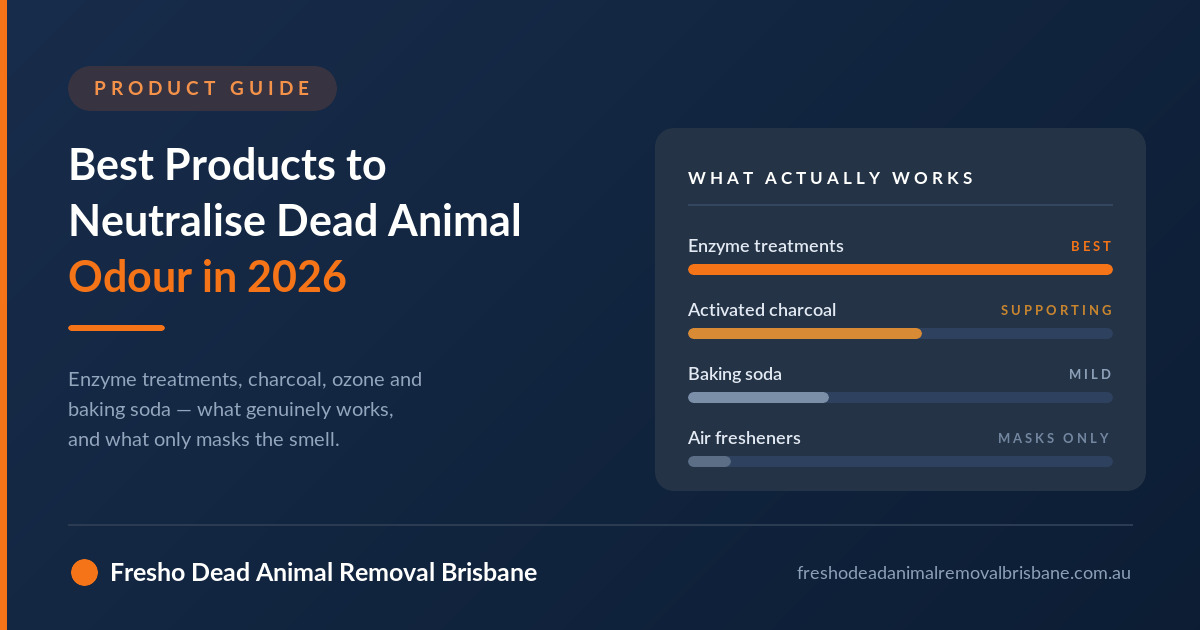
This distinction is genuinely important. Masking products add fragrance to compete with and cover an existing smell, offering only temporary relief that fades once the fragrance dissipates. Neutralising products chemically or biologically break down the actual compounds responsible for the odour, providing a genuine, lasting resolution rather than a temporary cover-up that leaves the underlying problem unresolved.
Enzyme-Based Treatments: The Gold Regular
Enzyme-based products remain the most workable category for genuinely neutralising decomposition odour, using specialised bacterial cultures that digest the organic compounds responsible for the smell at a molecular level. Look for products specifically formulated for organic or protein-based odours, since general-purpose enzyme cleaners aren't always concentrated enough for the more intense odour linked to decomposition specifically.
Activated Charcoal Products
Activated charcoal has genuine odour-absorbing properties, working through a physical process of trapping odour molecules within its porous structure rather than any chemical breakdown. Charcoal-based products can be a useful supplementary tool for managing residual, milder odour in a room after the main decomposition source has been treated, though they're not a substitute for proper enzyme treatment at the source.
Ozone Generators: Thorough but Requiring Caution
Ozone generators can be genuinely proper at breaking down odour compounds in the air, but they require methodical, professional use, since ozone itself can be harmful to breathe at the concentrations needed for workable odour treatment. These devices are generally best left to professional use in unoccupied spaces, rather than DIY application in an occupied home.
Baking Soda: A Genuinely Useful Supplementary Tool
Baking soda offers real, if modest, odour-absorbing properties for milder, residual smells, making it a reasonable supplementary tool once the main decomposition source has been addressed. It's not a standalone solution for active decomposition odour, but it can help manage lingering, lower-level smell in surrounding areas during the final stages of a resolution process.
Why General-Purpose Air Fresheners Consistently Disappoint
Regular aerosol or plug-in air fresheners fall firmly into the masking category, adding fragrance without addressing the underlying bacterial activity responsible for decomposition odour. Homeowners who rely on these products typically find the original smell returns quickly, sometimes combined unpleasantly with the artificial fragrance, offering no genuine, lasting improvement.
Why 2026 Has Seen More Genuinely Thorough Options Emerge
Product formulation has continued to improve in recent years, with more manufacturers investing in genuinely concentrated, purpose-built enzyme formulas specifically for severe biological odour, rather than relying on general-purpose fragrance products marketed loosely toward pet or household smells. This shift reflects growing consumer awareness that masking products simply don't deliver a lasting result for this specific type of odour.
Reading Product Labels Critically
When evaluating any product, look past marketing language like 'odour eliminator' or 'fresh scent' and check for the actual active ingredients listed. Genuine enzyme-based products will specify the bacterial culture or enzyme type used, while products relying purely on fragrance masking generally list only perfume or fragrance compounds without any genuine odour-neutralising active ingredient.
Commercial Pet Odour Removers: A Mixed Bag
Products marketed for general pet odour can sometimes help with milder, residual decomposition smell, but they're generally formulated at a lower concentration than what's needed for genuine decomposition odour, which tends to be considerably more intense and persistent than typical pet accidents. These products work best as a supplementary step rather than the primary treatment.
Why Professional-Grade Products Outperform Consumer Options
Professional deodorising products are generally formulated at significantly higher concentrations than consumer retail equivalents, giving them considerably stronger neutralising power for genuinely severe decomposition odour. This concentration difference is a major factor in why DIY consumer product attempts often fall short compared to professional treatment.
What to Look for When Choosing a Product Yourself
- Enzyme-based formulas specifically labelled for organic or biological odour, not just general fragrance products
- Products designed for pet accidents or biological waste, which share some chemical similarity with decomposition odour
- Avoid anything marketed purely as a fragrance or 'odour eliminator' without any specific active ingredient listed
- Check for genuine customer reviews specifically mentioning decomposition or dead animal odour, not just general household smells
Storing and Using Products Correctly for Best Results
Even the most proper product can underperform if stored incorrectly or applied without following instructions closely. Enzyme-based solutions in particular are sensitive to temperature and light exposure over time, so checking expiry dates and storing products in a cool, dark place helps ensure they retain full performance when you actually need them.
Why Product Choice Alone Isn't Always Enough
Even the best enzyme-based product needs to actually reach the full extent of the contamination to be workable, meaning application technique and thoroughness matter just as much as product selection. A well-executed product applied only to the visible, obvious spot, while missing broader fluid contamination in surrounding insulation or timber, will still leave residual odour behind.
How This Fits Into a Comprehensive Deodorisation Process
Choosing the right product is just one part of a genuinely thorough deodorisation process, which also involves thorough inspection, correct application across the full contaminated area, and sometimes material replacement for severely affected insulation. Our detailed guide on Professional Dead Animal Deodorisation Services in Brisbane covers exactly what a Final Check, professional deodorisation process involves beyond just product selection.
When DIY Products Simply Aren't Enough
For genuinely severe or long-standing decomposition odour, particularly cases involving significant fluid contamination in insulation or structural materials, even the best consumer-available products often aren't sufficient on their own. These situations generally require professional-grade treatment and, in some cases, material replacement to achieve full resolution.
Frequently Asked Questions
-
What's the single best product for neutralising dead animal odour?
Enzyme-based treatments specifically formulated for organic or biological odour remain the most thorough category, since they break down the actual compounds responsible for the smell rather than masking it. -
Do air fresheners actually help with dead animal smell?
No, regular air fresheners only mask the smell temporarily with fragrance, without addressing the underlying bacterial activity, so the original odour typically returns quickly. -
Is baking soda proper against decomposition odour?
Baking soda offers modest odour-absorbing properties useful for milder, residual smells, but it's not a standalone solution for active, significant decomposition odour. -
Are ozone generators safe to use for this kind of odour treatment?
Ozone generators can be workable but require methodical, generally professional use, since ozone can be harmful to breathe at the concentrations needed for thorough treatment. -
Why do professional products work better than what I can buy in stores?
Professional deodorising products are generally formulated at significantly higher concentrations than consumer retail equivalents, giving them considerably stronger neutralising power. -
How can I tell if a product is genuinely enzyme-based or just fragranced?
Check the active ingredients list for a specific bacterial culture or enzyme type. Products relying purely on fragrance will only list perfume or scent compounds, without any genuine odour-neutralising ingredient. -
Does product storage really affect how well it works?
Yes, enzyme-based solutions are sensitive to temperature and light exposure over time, so checking expiry dates and storing products correctly helps ensure they retain full performance.
Final Thoughts
When it comes to neutralising dead animal odour, enzyme-based treatments remain the genuinely proper choice, working to break down the underlying compounds rather than simply masking them with fragrance. Product choice matters, but thorough application across the full extent of any contamination matters just as much for a truly lasting result.
If dead animal odour in your Brisbane home needs more than a store-bought product can offer, contact Fresho Dead Animal Removal Brisbane today for professional-grade deodorisation that actually works.